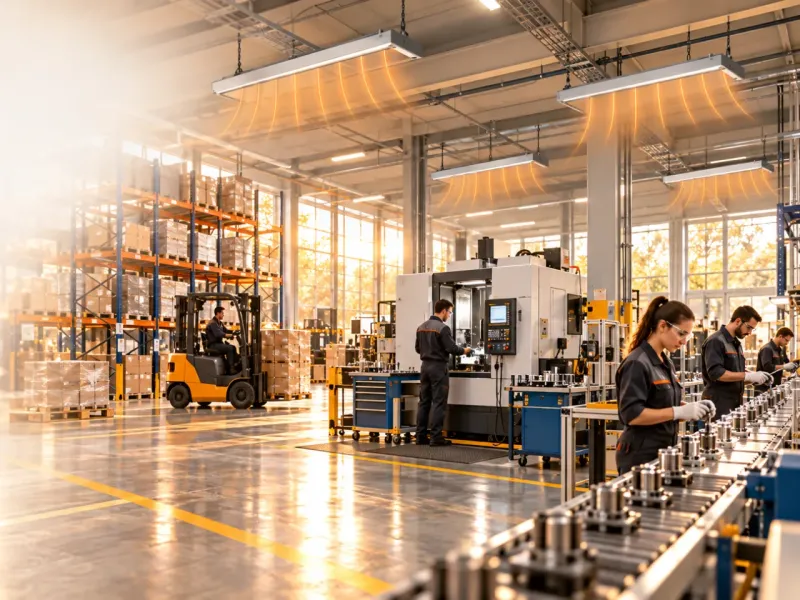
An infrared heater transfers thermal energy through radiation. Surfaces within its coverage absorb that energy and warm up, then release heat to the surrounding air. Comfort therefore depends on the temperature of the floor, walls and nearby objects as well as the air temperature.
This makes infrared heating useful for warming an individual workstation in a large building or a particular area within a commercial space. For primary heating, heaters are positioned to provide the required heat distribution, and their combined output is selected to match the building’s heat loss.
A system can provide:
Ceiling-mounted models keep usable floor space clear. An electric system does not need a boiler, heating pipework or a water-based heat-transfer circuit. Planning takes account of the available electrical capacity, installation height and mounting requirements of the selected models.
Electricity consumption depends on the equipment’s power rating and how long it runs. Running time is affected by insulation, glazing, ventilation, outdoor conditions and the indoor temperature setting.
Thermostats for infrared heaters switch the heating off when the set temperature is reached and back on as the room cools. Programmable controls can reduce the temperature automatically outside occupied hours, reducing the need for manual adjustment.
The benefit of localised heating and scheduled control depends on how the space is used. Running costs should therefore be assessed for the particular building and operating schedule.
18 November 2025
The Teplov company successfully implemented a joint charity project with the Caritas Kharkiv Charitable Foundation for the supply of wall-mounted infrared heaters.
See more13 July 2021
Ceiling heaters BiLux Ukraine lost a patent dispute to Ukrprom Company, the owner of intellectual rights to infrared heaters TM Teplov
See moreTeplov is a Ukrainian manufacturer of infrared heaters. We have worked in infrared heating since 2005 and have manufactured heaters of our own design since 2010.
Our equipment is used for primary, supplementary and localised heating in residential, commercial, industrial and agricultural buildings. We have been developing our export business since 2014.
We help you select heaters for your specific requirements, determining the necessary output, number of units, positioning and temperature controls. We take account of heat loss, ceiling height and how the space is used.
Learn more about usStart with your heating requirement: primary heating, additional warmth or heating for a particular area. Then choose an installation method and check that the model is suitable for the conditions in your space.
The range includes:
Floor area alone is not enough to make the final choice. Two rooms of the same size may need different heating output because of differences in insulation, ceiling height and glazing. With ceiling-mounted heaters, the distance between the heater and the area to be warmed also matters.
Prices for individual models are listed in the catalogue. The total system cost depends on the number of heaters, control equipment, mounting accessories, electrical installation materials and labour.
For a recommendation, provide the floor area and ceiling height, a brief description of the insulation and glazing, your preferred temperature and the occupancy schedule. A floor plan or photographs will help us determine suitable heater positions.
Planning heating for a new space or improving an existing system? Send us the details — we will help you select the heater models, quantities and controls.
Yes. The combined heater output must match the heat loss of the space, and their positions must provide the required heat distribution. Heaters can also provide supplementary warmth or heat individual areas. See the completed heating projects for examples.
We need the floor area, ceiling height, wall and roof or floor insulation details, window sizes, preferred temperature and occupancy schedule. For industrial and commercial spaces, ventilation, how often doors or loading bays are opened, and the available electrical capacity also matter.
Without a thermostat, a heater rated at 1 kW uses approximately 1 kWh during one hour of continuous operation.
According to operating data, when used as part of a heating system with a thermostat, average electricity consumption is 30–40% of the consumption during continuous operation at rated power. For a 1 kW heater, this means an average of 0.3–0.4 kWh of electricity over one hour. The thermostat maintains the set temperature by alternating heating periods and pauses.
Actual consumption depends on heat loss, weather conditions and the temperature setting. It may be higher during the initial warm-up of the space.
Yes, with a programmable thermostat. It changes the set temperature according to a schedule. Outside working hours, the temperature can be reduced by, for example, 5–7 °C where this suits the way the space is used. The return to the comfort setting is scheduled to allow enough time for warm-up.
Depending on the model, they can be mounted on the ceiling, on a wall or within an Armstrong suspended ceiling. Installation height, clearances and mounting hardware must follow the instructions for the particular heater. Ceiling-mounted installations also take account of where people will be and which areas need warmth.
Prices and specifications are shown on the individual product pages. Before ordering, you can review the delivery information, payment methods and warranty terms. The cost of a complete system is determined after the equipment has been selected.