
Heating a 12 m² Greenhouse with Infrared Heaters
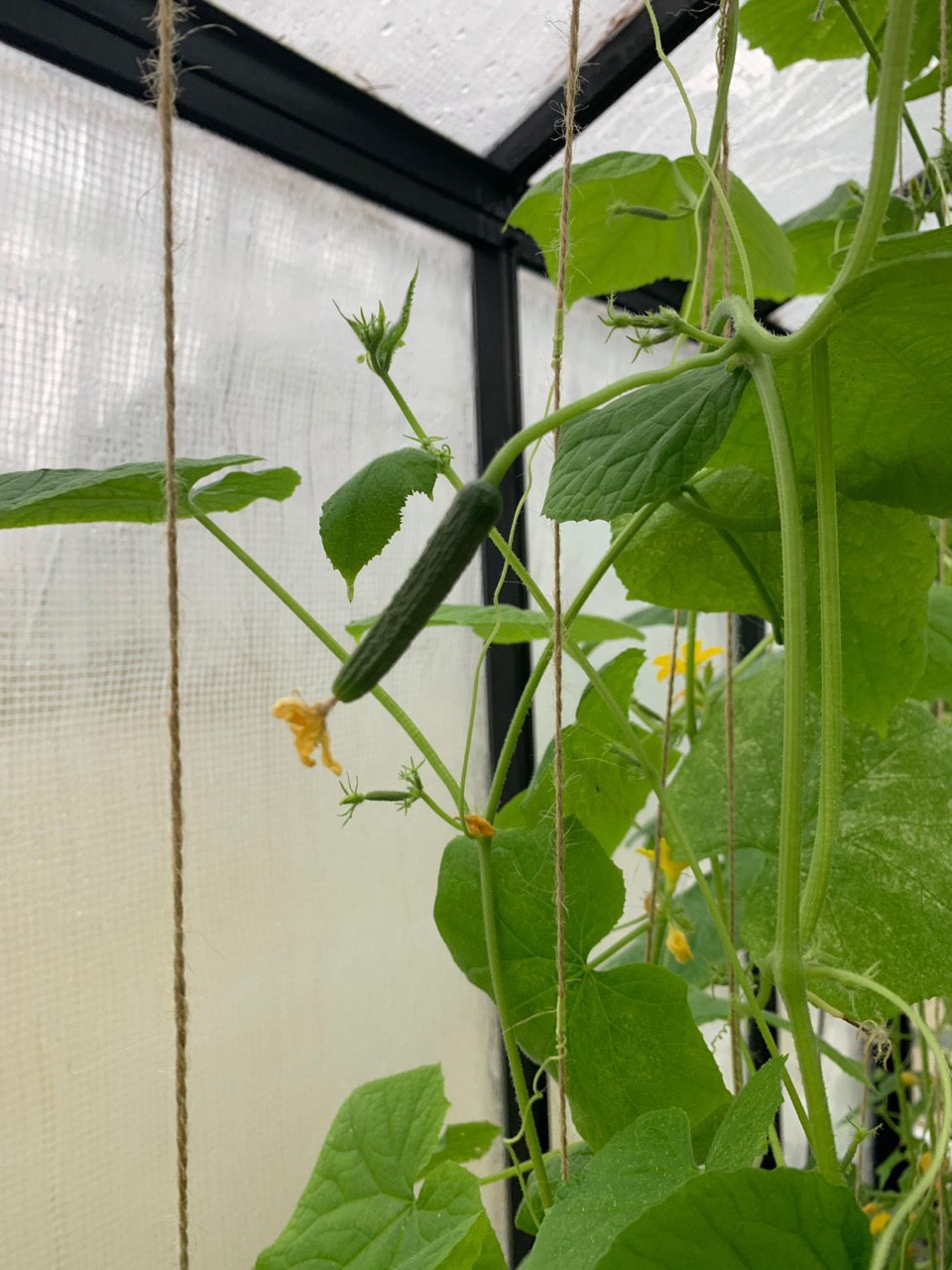
Heating a Small Greenhouse in Lithuania
Teplov implemented a compact electric infrared heating system for a private greenhouse in Lithuania.
The greenhouse has an area of 12 m² and a height of 2.3 m. It is made of polycarbonate and is used during the cold season — autumn, winter and spring. To reduce heat loss, the greenhouse was additionally covered with a protective film.
The main objective was to maintain the required temperature without a complex heating system and with automatic temperature control.
Solution — Two Teplov B1350 Ceiling Infrared Heaters
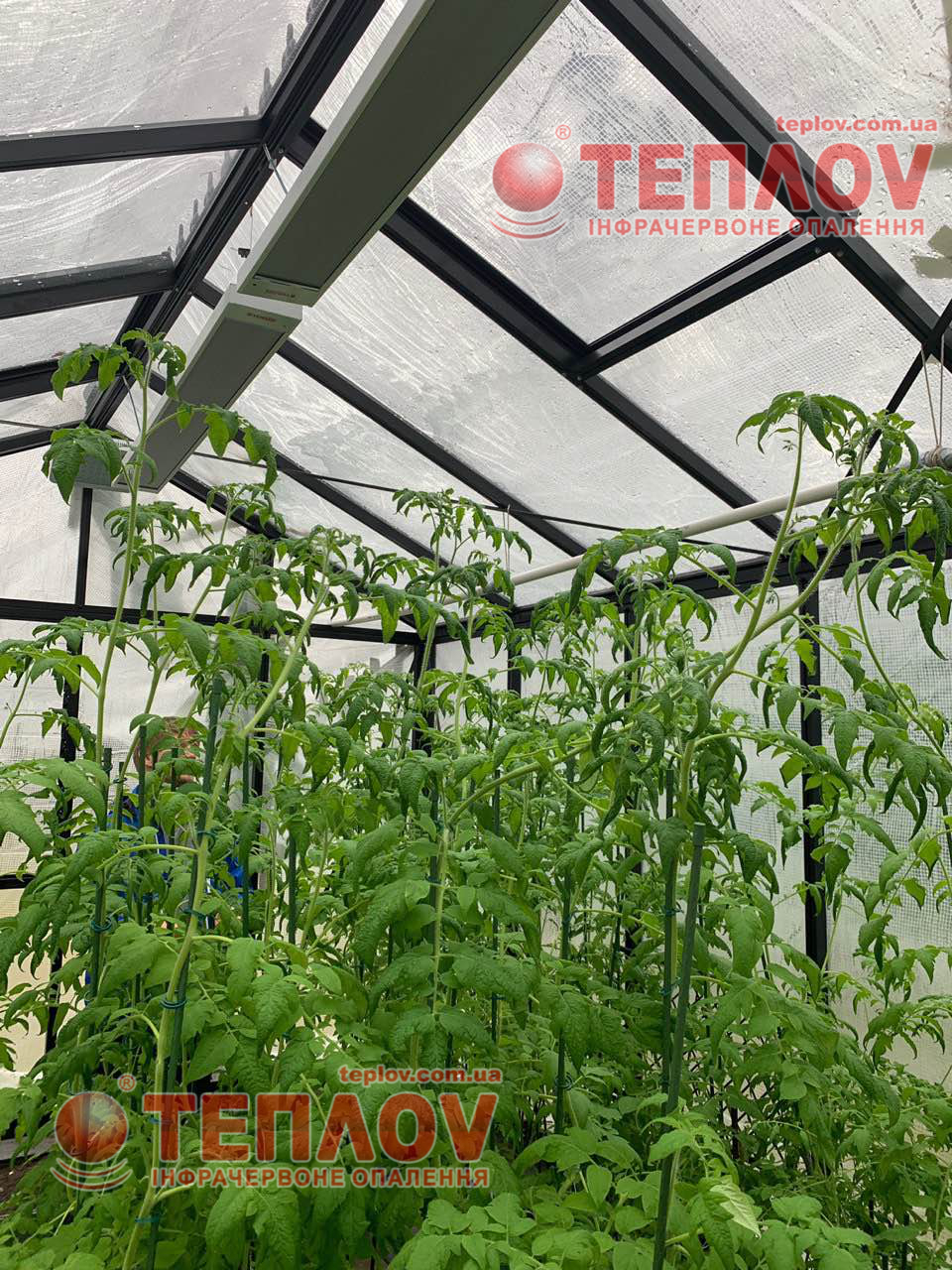
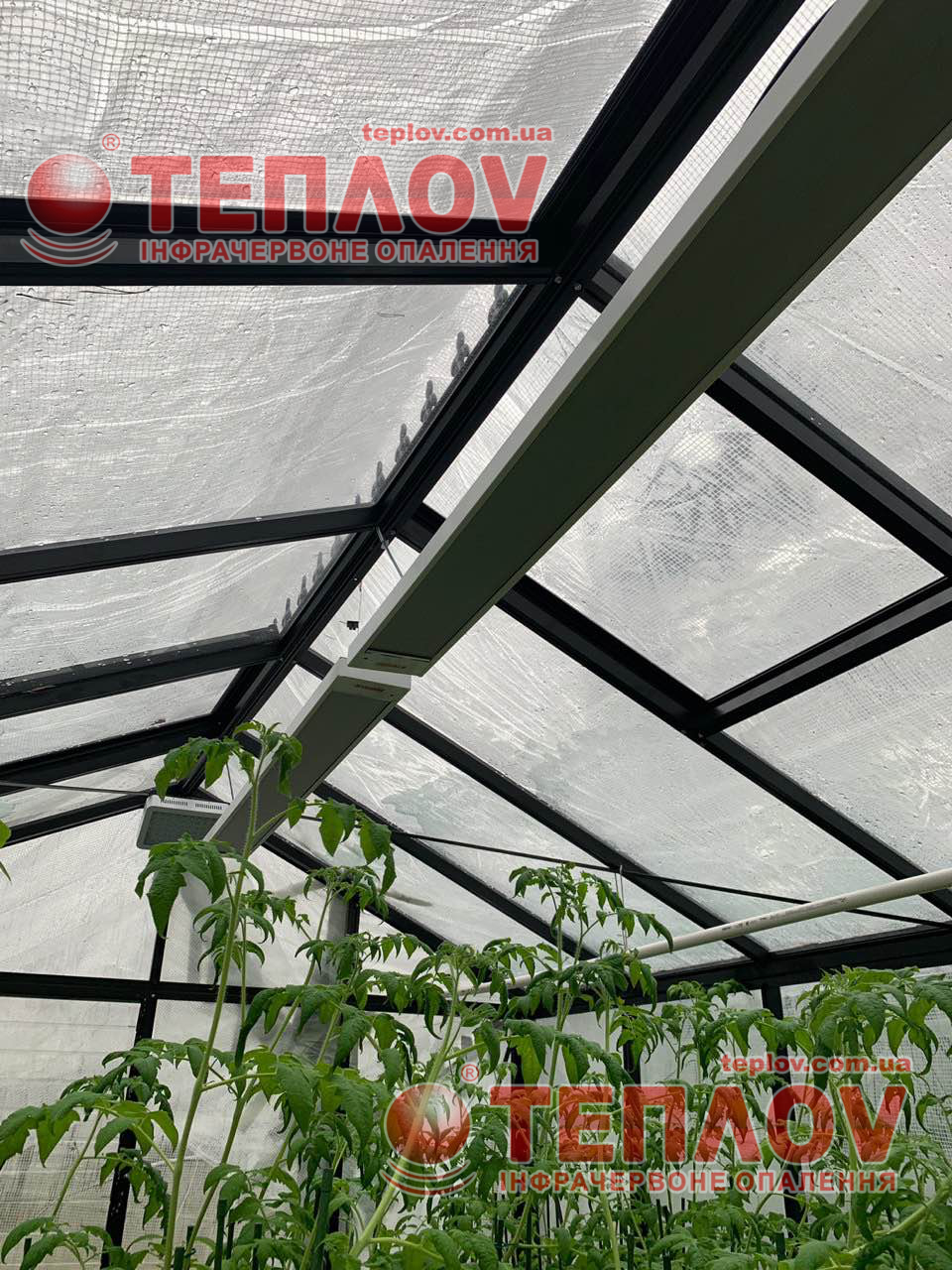
The greenhouse was equipped with two Teplov B1350 ceiling infrared heaters and a thermostat.
|
Parameter |
Project solution |
|
Greenhouse area |
12 m² |
|
Height |
2.3 m |
|
Construction |
Polycarbonate |
|
Additional covering |
Protective film |
|
Equipment |
2 × Teplov B1350 |
|
Control |
Thermostat |
|
Project country |
Lithuania |
|
Installation year |
2020 |
Ceiling installation allows heat to be directed into the working area without taking up useful floor space. The electric system does not require pipelines or a water-based heat-transfer system.
Why Use Infrared Heating in a Greenhouse?
Infrared heating works differently from conventional convective heating. Heat is transferred not only by heating the air, but also directly to surfaces and objects within the heating zone.
Infrared thermal radiation is a natural part of heat exchange in nature. The long-wave infrared radiation used by Teplov heaters is non-ionizing radiation and is suitable for heating when the equipment is installed and operated according to its specifications.
Another advantage of electric infrared heaters is their high conversion efficiency. For electric heating appliances, this figure can be around 98%. However, the efficiency of the heater itself should not be confused with the percentage of energy savings. The overall energy consumption of a greenhouse heating system also depends on heat losses, required temperature, operating schedule and heat distribution.
Teplov's Practical Experience with Greenhouse Heating
Teplov has carried out practical comparisons of different greenhouse heating methods. During these tests, plants heated with infrared systems were observed to develop faster, start flowering earlier and consequently begin producing fruit earlier.
Energy consumption was also compared with convective heating systems. Under the tested conditions, infrared heating allowed electricity consumption to be reduced. The actual result depends on the greenhouse construction, insulation, temperature, operating conditions and other factors, so practical test results should not be considered a guaranteed saving for every greenhouse.
For this reason, selecting a heating system requires consideration of more than just the floor area. The greenhouse height, construction materials, additional covering and required temperature should also be taken into account.
How to Reduce Greenhouse Heat Loss
Even an efficient heating system cannot compensate for excessive heat loss. In this project, an additional film covering was used over the polycarbonate greenhouse to reduce heat loss.
For more efficient operation:
- minimize gaps and uncontrolled cold-air infiltration;
- check the sealing of doors and ventilation elements;
- use additional covering when appropriate;
- position the heaters correctly in relation to the plants and heated zone;
- use a thermostat to maintain the required temperature automatically.
Teplov B1350 for Small Greenhouses
The Teplov B1350 is a ceiling-mounted infrared heater suitable for heating small greenhouses, individual zones and other spaces.
Two B1350 heaters were installed in this 12 m² greenhouse. The required number and power of heaters should be selected according to the actual heat-loss characteristics of the particular greenhouse rather than area alone.
Need heating for your greenhouse? We can calculate the required heating capacity, number of heaters and their recommended placement based on your greenhouse parameters.