
Infrared grain drying with Teplov heaters
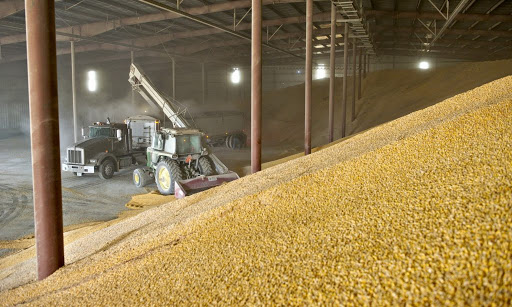
Grain drying requires controlled heat input and effective moisture removal. Different technologies can be used for this purpose, while the choice of equipment depends on the grain characteristics, initial moisture content, required final moisture content, and drying conditions.
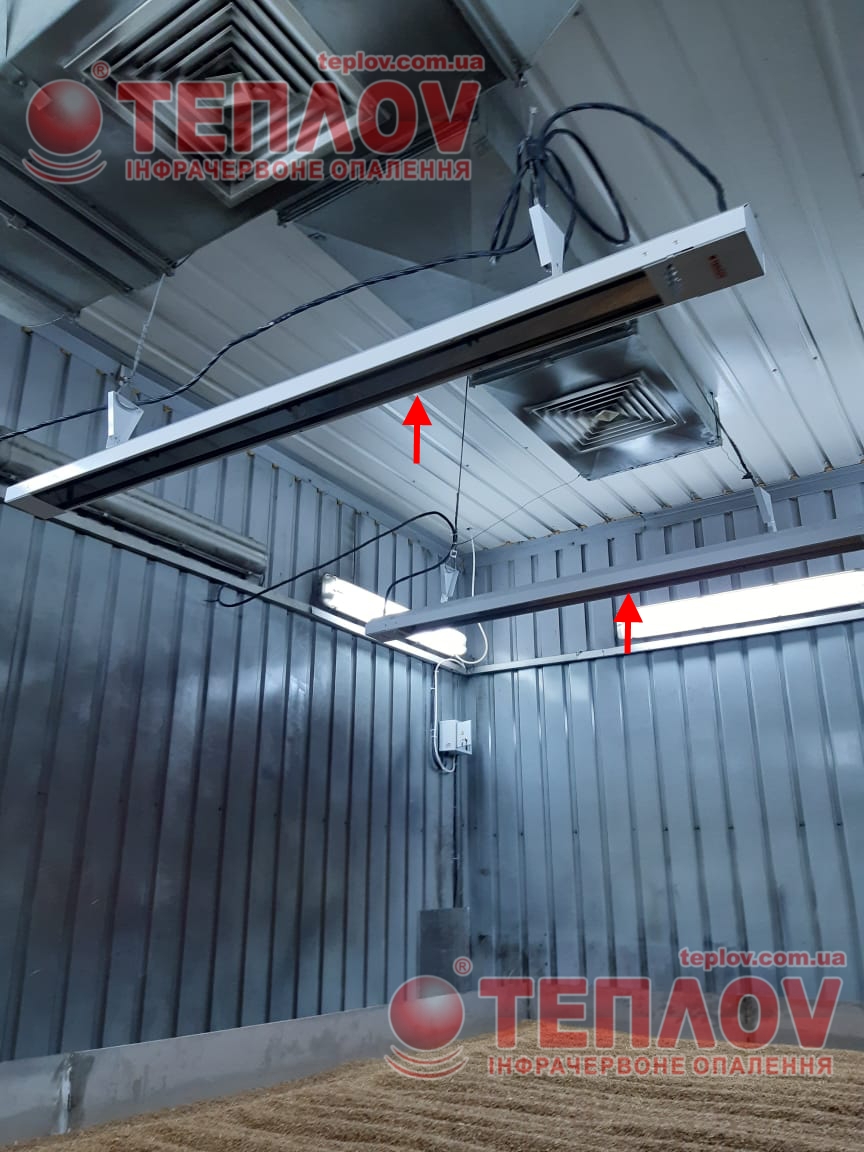
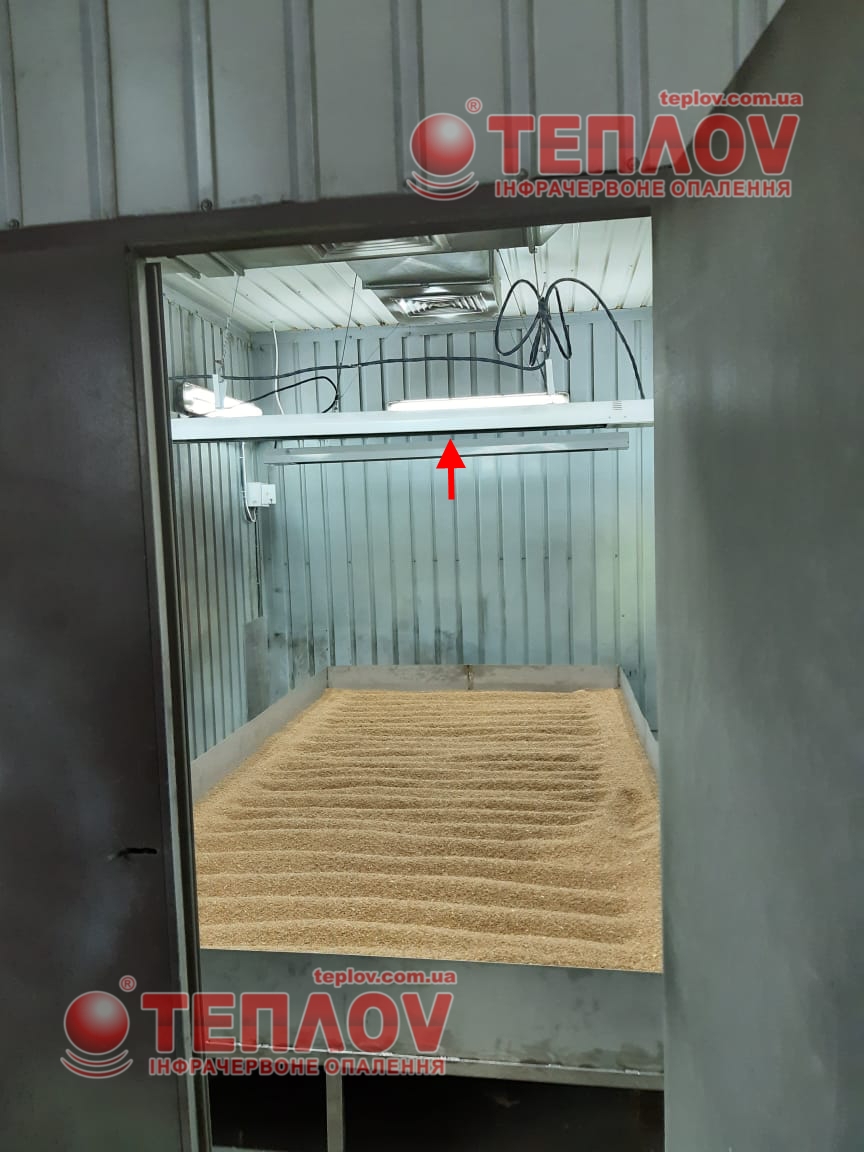
At one of the agricultural enterprises, TM Teplov implemented a solution for infrared grain drying in specially equipped drying boxes. TeploV U2000 infrared heaters were used to transfer thermal energy, while forced exhaust ventilation was installed to remove moisture from the drying area.
Task: Organize Grain Drying
The main task of the project was to provide the required temperature conditions for uniform grain drying in specially equipped premises.
When selecting the heating method, it was necessary to consider not only the air temperature inside the room but also the way thermal energy was transferred directly to the grain.
For this project, infrared heating was selected because it allows thermal energy to be directed toward a specific area and object.
Solution — Teplov Infrared Heaters
TeploV U2000 infrared heaters were used to implement the project.
Unlike systems primarily designed to heat the entire volume of air, infrared radiation transfers thermal energy directly to the surfaces and objects exposed to the radiation.
The U2000 features specially designed reflectors. The infrared beam has an 80° opening angle, allowing directional heating and concentration of thermal energy on the required area.
As a result, the heater can be used not only for space heating but also for localized process heating.
How Infrared Grain Drying Works
The operating principle of the system is based on transferring thermal energy from the infrared heater to the heated object.
In the implemented project, infrared radiation was directed toward the grain, providing direct heating. According to the conditions of the implemented project, the grain was heated to a depth of up to 4 cm.
However, heating alone does not remove moisture from the drying area. Therefore, forced exhaust ventilation was an important part of the system. It provided the removal of excess moisture and warm air from the premises.
Thus, the project combined two processes:
- supplying thermal energy to the grain using infrared radiation;
- removing moisture from the drying area using forced ventilation.
Key Project Parameters
|
Parameter |
Value |
|
Application |
Grain drying |
|
Heating technology |
Infrared radiation |
|
Equipment |
TeploV U2000 |
|
Rated power of the model |
2000 W |
|
Radiation opening angle |
80° |
|
Moisture removal |
Forced exhaust ventilation |
|
Year of implementation |
2020 |
The parameters listed above refer to the implemented project. The number of heaters, their positioning, and operating mode for another drying system should be determined separately, taking into account the characteristics of the grain and the specific process conditions.
TeploV U2000 Infrared Heater
The TeploV U2000 infrared heater was used for grain drying at the facility.
It is an electric infrared heater with a rated power of 2000 W. Its reflector design produces a directional infrared radiation pattern with an 80° opening angle.
For detailed information about the equipment, its specifications, design, and possible applications, see the page dedicated to the TeploV U2000 infrared heater.
Moisture Removal
Drying efficiency depends not only on the amount of thermal energy transferred to the grain. The moisture released from the grain during the drying process must also be removed from the drying area.
Forced exhaust ventilation was therefore provided as part of the implemented project.
The ventilation system removed warm air and excess moisture from the premises. This approach allows infrared heating and ventilation to be considered as interconnected components of the drying process.
Project Results
The use of Teplov infrared heaters made it possible to implement a grain heating system in specially equipped drying boxes.
The key features of the implemented solution included:
- the use of infrared radiation to transfer thermal energy;
- directional heating provided by the U2000 reflector design;
- the ability to concentrate heat on the required object;
- forced moisture removal;
- quick equipment installation;
- the use of infrared heaters for process heating applications, rather than only for space heating.
This project demonstrates one of the ways infrared technology can be used in agriculture — grain drying with directional infrared heating.
TM Teplov infrared technologies can be used not only for drying and process heating. More information about the use of infrared heating technologies in agriculture is available on the page dedicated to infrared heating for greenhouses and agricultural facilities.