
Infrared Heating for the Salon Shtor Curtain Shop in Kharkiv

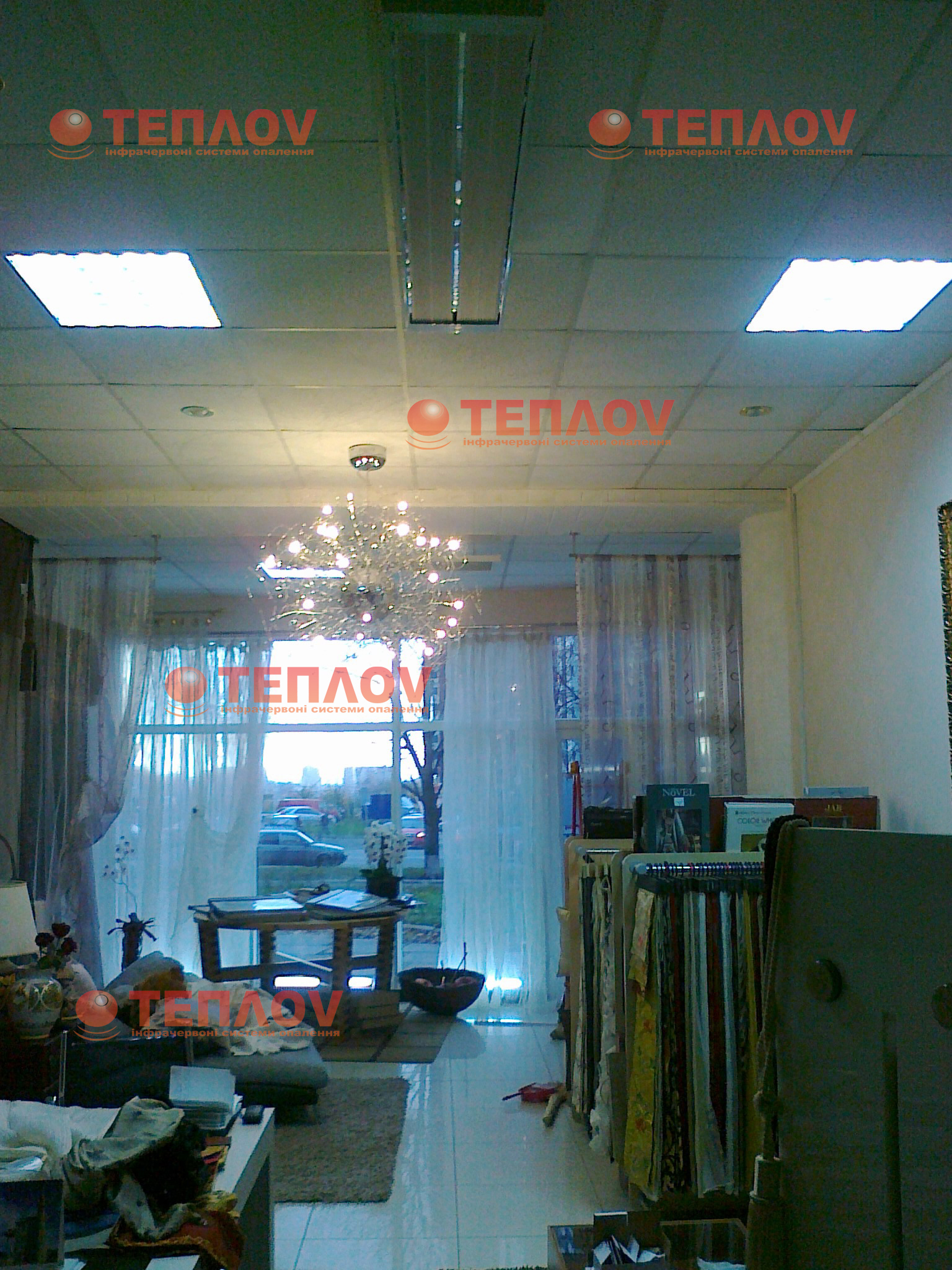
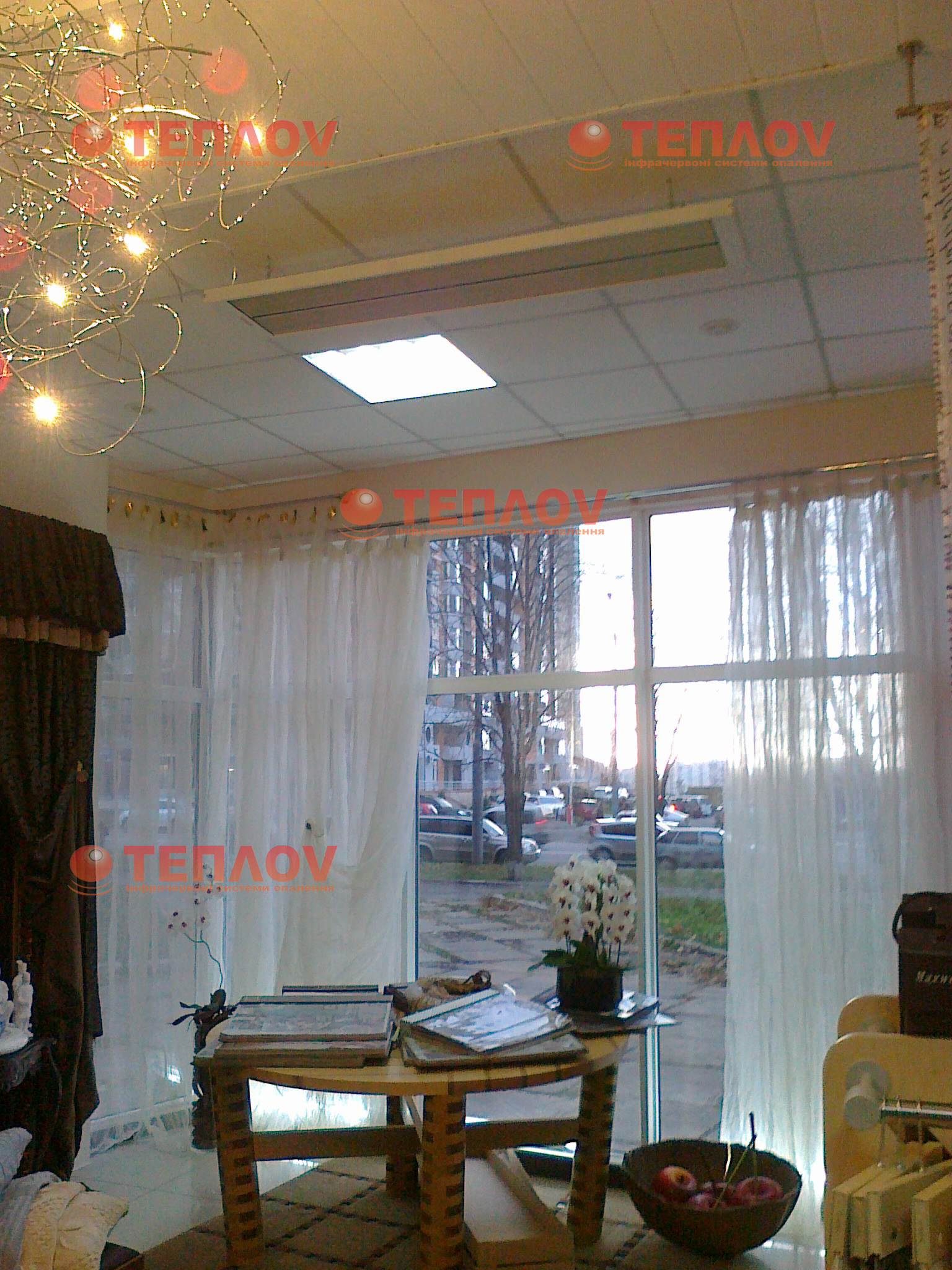
The Salon Shtor curtain shop in Kharkiv needed heating for a 45 m² retail interior with a 3.2 m ceiling and extensive storefront glazing. The convection-based heaters previously used did not provide adequate heating. The project used two Teplov P2600 ceiling-mounted infrared heaters, with shared control through a programmable thermostat.
The task: warmth in the retail area beside the window
Large shop windows help display fabrics and curtains, but they also need attention when choosing winter heating. Heat escapes through glazing; the rate depends on its area, construction, airtightness and the temperature difference between indoors and outdoors.
There is another consideration: someone beside cold glass can feel chilly even when the air temperature seems acceptable. Radiant heat exchange with surrounding surfaces affects comfort. For this shop, the conditions where staff and customers examine samples and browse catalogues therefore matter alongside the thermostat reading.
The project needed to provide heating in working areas while retaining space for displays, the table and circulation. Adding floor-standing equipment would have restricted the options for arranging merchandise.
Project details
|
Parameter |
Site details |
|
Site |
Salon Shtor curtain shop, Kharkiv |
|
Floor area |
45 m² |
|
Ceiling height |
3.2 m |
|
Distinctive feature |
Extensive storefront glazing |
|
Initial problem |
Inadequate heating from the equipment previously used |
|
Equipment |
Two Teplov P2600 heaters |
|
Position |
At ceiling level, in working areas |
|
Control |
Programmable thermostat |
Why infrared heaters were chosen
Infrared heating transfers part of its heat by radiation directly to people and surfaces within the heater’s coverage. Warmed surfaces then contribute to heating the air. This makes it possible to influence thermal conditions in the occupied area rather than relying solely on raising the room air temperature.
For Salon Shtor, the useful combination is directed radiant heating and ceiling mounting. The heaters sit above the retail interior, leaving the floor available for customers and displays. The glazing remains part of the building envelope: infrared heating does not eliminate heat loss through the glass or replace its insulating performance.
The installation uses Teplov P2600 ceiling heaters. The two units were placed in working areas. With this arrangement, the positions of people, furniture and fabric samples matter: tall objects can obstruct direct radiation. Ceiling height and the actual mounting height must also be distinguished when checking installation requirements.
How the solution compares with other heating options
|
Option |
Considerations for a shop with large windows |
|
Electric convectors and oil-filled radiators |
Heat the room through convection and, to varying degrees, radiation. Performance depends on capacity and positioning; portable units need floor space |
|
Ceiling-mounted infrared heaters |
Deliver radiant heat to working areas while preserving retail floor space. Correct positioning and sufficient capacity are essential |
|
Hydronic radiator heating |
Requires a hot-water heat source and pipework. Electric panels do not need a separate water circuit |
The previous heating at this site was inadequate. That describes the system used here; it does not establish that all convectors would be unsuitable. The practical benefits of the chosen arrangement are its position above working areas, a clear floor and shared control of two heaters. Running costs should be compared under similar comfort and operating conditions.
Control and application
A programmable thermostat allows heater operation to follow the shop’s opening schedule. Working-hours and out-of-hours temperatures should account for warm-up time and product storage conditions. A thermostat does not establish a fixed energy consumption: usage depends on weather, heat loss, settings and heater operating time.
The installation provided the shop with two ceiling-mounted sources of radiant heat under shared control. The same number of heaters should not be copied to another site solely on the basis of floor area. Glazing, insulation, ventilation, opening hours and available electrical capacity also need assessment.
Other models are available in the ceiling infrared heater range. The pharmacy heating project offers another retail example, while the commercial premises heating page explains the approach to system selection.
To discuss heating a shop with large windows, contact Teplov. Send a plan, photographs of the glazing, the floor area, ceiling height and opening hours. These details provide a starting point for selecting capacity and heater positions.
Questions about infrared heating for a store
Will two P2600 heaters suit any 45 m² shop?
No. That is the equipment used for this particular project. Another shop may have different glazing, insulation, air exchange and temperature requirements. Heater numbers depend on heat loss and the proposed layout, not floor area alone.
Can ceiling heaters be installed near curtain samples?
Positions must comply with the clearances and restrictions in the instructions for the specific model. Allow for fabrics moving or being rearranged. Curtains must not touch the heater or encroach on the required clearances; a universal distance cannot be given without the instructions.
How can the system’s electricity use be determined?
An initial estimate uses heater power and the accumulated time each unit is switched on. Actual consumption should be checked using electricity metering over a chosen period. Comparisons with the previous heating should account for outdoor temperature, opening hours and the indoor conditions maintained.