
Infrared heating for a cinema auditorium in Kharkiv

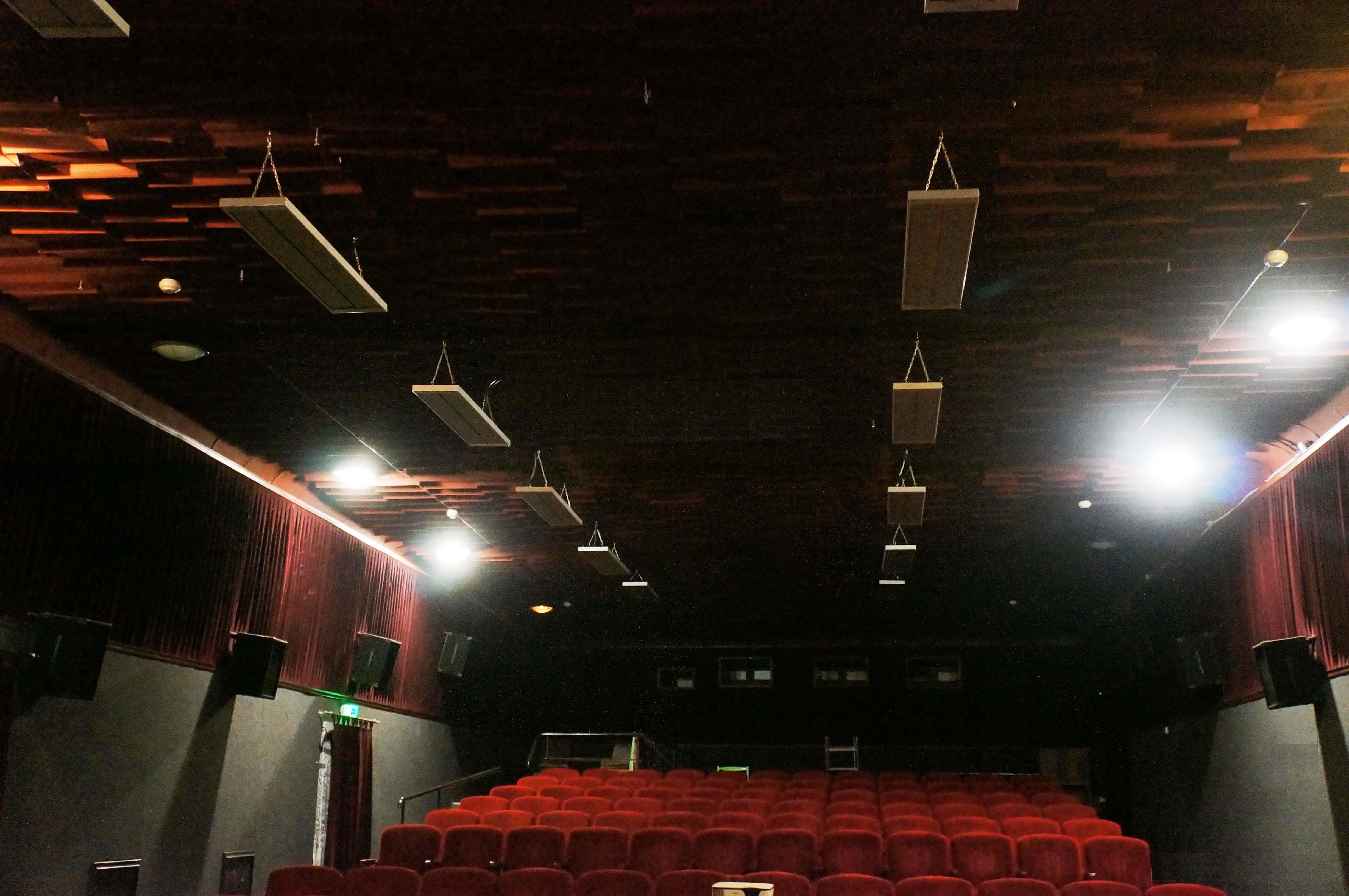
A cinema in Kharkiv uses twelve Teplov P2000 long-wave infrared heaters to heat its seating area. The units were suspended from the ceiling around the perimeter of the auditorium. This arrangement brings heat to the rows where the audience sits throughout a film, without taking up space beside the seats or in the aisles. All twelve heaters can stay on when the house lights go down.
Bringing heat to the audience
A cinema seating plan tells you exactly where people will sit throughout a film. Unlike someone sitting at a café table, a cinemagoer cannot move their chair a little closer to a heater or further away. Choosing the system therefore involves more than adding up the kilowatts. The designer also needs to work out how heat will reach each row and whether the seats nearest a heater will feel noticeably warmer than those further away.
In Kharkiv, the installed capacity was spread across twelve positions around the auditorium. The same model was used at each position:
| Equipment | Quantity | Rated power per heater | Total installed power |
|---|---|---|---|
| Teplov P2000 | 12 | 2 kW | 24 kW |
The heating surface of the P2000 gives off part of its heat as long-wave infrared radiation. People, seats, the floor and other exposed surfaces absorb that radiation. This is a practical difference from warm-air heating: radiant heat can reach a seated viewer without a stream of warm air being directed towards them. The auditorium still needs a supply of fresh air. When sizing the heating system, the designer must account for the heat needed to warm that incoming air as well.
Why the Teplov P2000 suits a film screening
When the film is about to start, the lights go down, but the audience stays put and the need for heat continues. A glowing heating element would leave another light source in the audience’s field of view. The heating surface of the P2000 produces no visible glow in operation. The projectionist can darken the auditorium without switching off the heaters serving the seating area.
Sound matters just as much. A loud score can mask the hum of equipment that would be easy to hear during a whispered exchange or a pause in the soundtrack. The P2000 heaters run silently. This means the cinema can keep heating the seats during the film itself, instead of relying on the short interval between screenings.
Designing the heating for another cinema
The Kharkiv installation is one example of a ceiling layout. Another auditorium with exactly the same seat count may need a different arrangement. If the floor rises towards the back, for example, people in the rear rows may sit considerably closer to the ceiling than those at the front. A floor plan alone does not show that difference. When selecting ceiling-mounted infrared heaters, a cross-section through the seating is useful. Failing that, measuring the ceiling height above both the first and the last row helps establish the distance from the heaters to a seated viewer.
The areas to be heated also depend on the venue. At the cultural centre in Stepanky, the brief covered the performers on stage as well as the audience. At the concert hall in Haivoron, heaters were mounted on the walls at an angle. These projects illustrate how the use of the space and the available mounting positions can change the layout, even when the seating looks much the same.
Planning heating for a cinema? Send Teplov a seating plan, ceiling heights, details of the ventilation system and your screening schedule. We can use them to size the system, propose heater positions and estimate the cost for your auditorium. Request a cinema heating estimate.
People use the foyer, box office and café differently from the way they use the auditorium. For examples of heating in those kinds of spaces, see our commercial heating section.
Questions about heating a cinema auditorium
How much electricity would twelve P2000 heaters use during one film?
If all twelve ran continuously at rated power throughout a two-hour film, they would use 48 kWh: 12 × 2 kW × 2 h. This is a calculation for the stated conditions. Actual use depends on how long each heater is on.
Can the heating wait until the film starts?
If the auditorium has cooled overnight, the air and seats may still be cold when the audience arrives. To set a start time, run a warm-up trial after a typical night and check conditions in several rows before the first screening. That gives you a lead time suited to your venue.
Can we heat selected rows when few tickets have been sold?
The system can be designed so that heaters serving selected rows form a separately controlled group. The layout should match the seats offered for sale at quieter screenings. Separate group controls have not been confirmed for the Kharkiv installation.