
Infrared heating for a church in Vinnytsia region

When designing church heating, it is important to consider where people are during services. The congregation and the church minister may occupy different parts of the building, so equipment selection requires attention to each area.
At a church in Vinnytsia region, this task was addressed using different models of Teplov infrared heaters. B600 and B1000 units were used in the areas occupied by the congregation, while two P2000 heaters were installed to heat the church minister’s area. The equipment was selected through a heating calculation that took the layout into account.
Which heaters were used
| Heating area | Equipment | Purpose |
|---|---|---|
| Areas occupied by the congregation | Teplov B600 and Teplov B1000 | Heating the areas where parishioners gather |
| Church minister’s area | Teplov P2000, 2 units | Heating the area occupied by the church minister |
This combination shows how several models can serve different heating areas within one space. The number and positions of the heaters should not be copied for another church without calculations: performance depends on heat loss, installation height and distance from people.
How infrared heating warms occupied areas
Infrared heaters transfer heat by radiation to people and surfaces within their coverage area. The warmed surfaces then release some of that heat to the surrounding air. It is therefore important to establish where the heat will be directed and which areas it will cover.
For a church, this allows the positions of the congregation and minister to be considered directly in the heating layout. The units are placed to heat the parts of the space that are in use. Thermal comfort depends not only on air temperature, but also on radiant heat exchange with the surrounding surfaces and heaters.
Local heating does not create thermally isolated zones: air continues to move through the space. Its purpose is to provide additional radiant warmth where people are present.
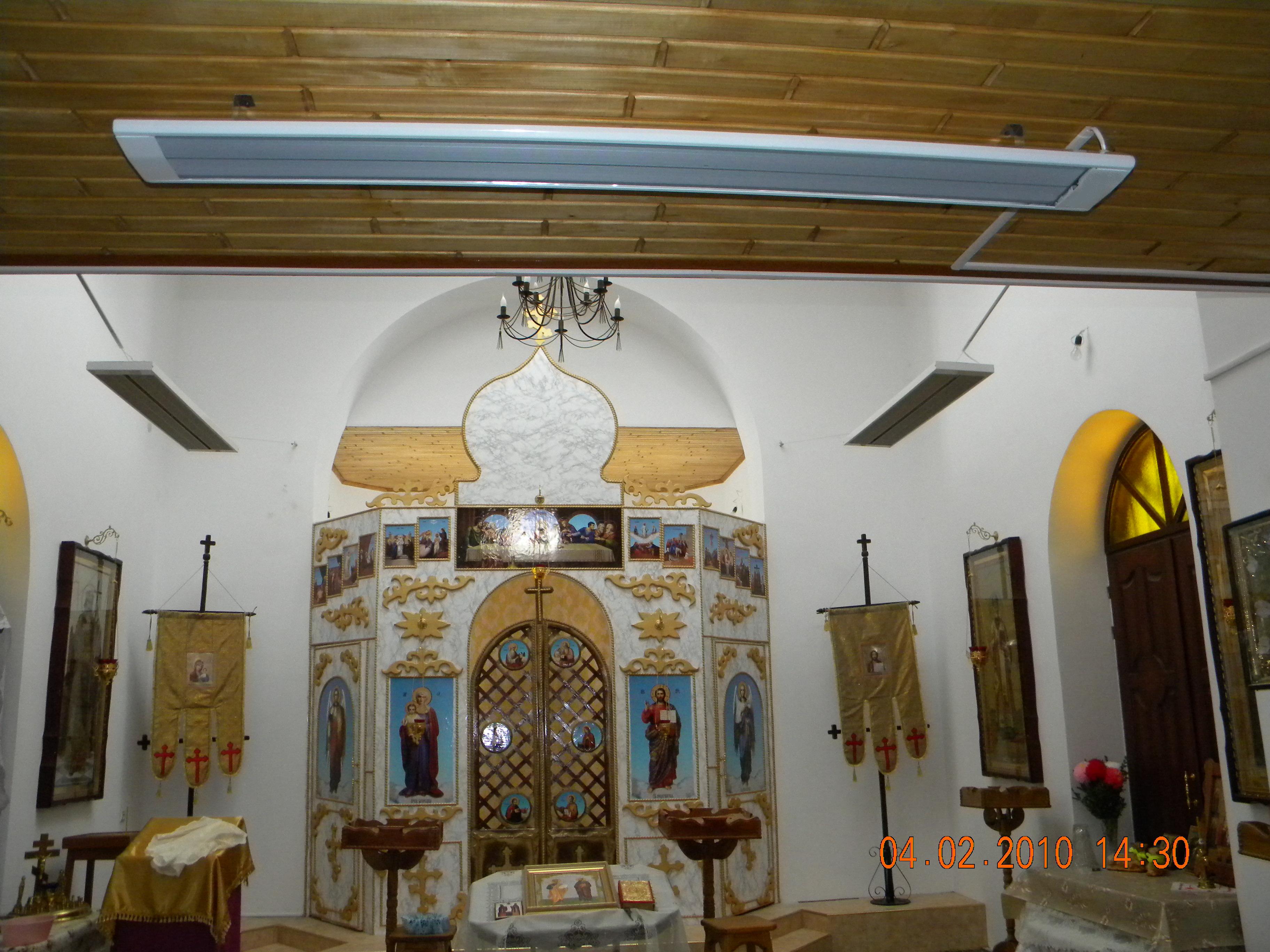
Why different Teplov models were selected
The range of ceiling infrared heaters includes units with different power ratings. This allows equipment to be selected to suit conditions in individual parts of a building.
In this project, B600 and B1000 models were used in the congregation’s areas, and two P2000 units in the minister’s area. Selecting different models formed part of the overall equipment layout.
Three connected factors matter for this solution: the required output, the position of each heater and its coverage. Floor area alone is not enough to select a heater; heat loss and permitted installation height must also be considered. Calculations help match the equipment’s capabilities to the conditions of the particular building.
Installation without major alterations to the building
According to the project description, installing the system required neither redecoration nor major renovation. Electric infrared heaters do not need water-based heating pipework; provision is needed for mountings, an electrical supply and controls.
The feasibility of this type of installation is assessed for each building individually. The layout must take account of existing finishes, available fixing points and equipment installation requirements.
Another example of selecting several models can be found in the project for heating the Church of St Volodymyr the Great in Buchach. General guidance on system selection is available in the section on heating public and commercial premises.
Planning church heating or local warmth for selected areas during services?Contact Teplov for a heating calculation. Send the building dimensions, photographs, insulation details and information on where people gather to help select the models and determine installation positions.
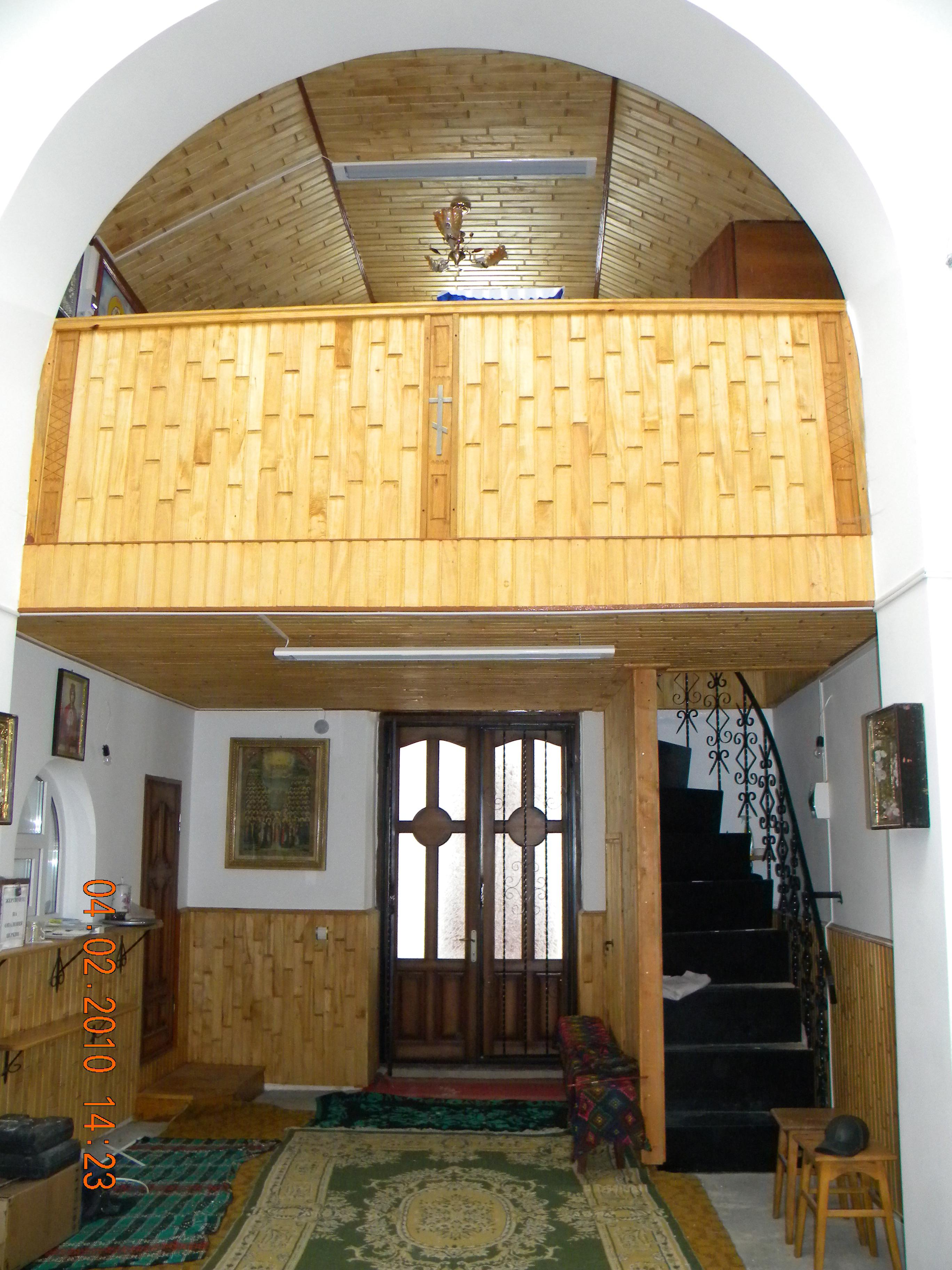
Questions about infrared church heating
Can heating be directed towards the congregation’s and minister’s areas?
Yes. The design can provide for individual heaters serving these areas. At the church in Vinnytsia region, Teplov B600 and B1000 heaters were used for the congregation, and two P2000 units for the minister’s area. Equipment positions are selected according to the room geometry and installation requirements.
Why use heaters with different power ratings in one church?
Different parts of the building may have different installation conditions and heating requirements. Several models allow output and placement to be matched to each area. A more powerful unit is not a universal replacement for several smaller ones: radiation distribution and distance from people must be considered.
Can separate heating areas be switched on independently?
This option can be provided when designing the electrical supply and controls. Groups of heaters are connected according to the agreed layout. Independent switching and the method of regulation need to be specified before installation.