
Heating a clothing retail pavilion in Rivne

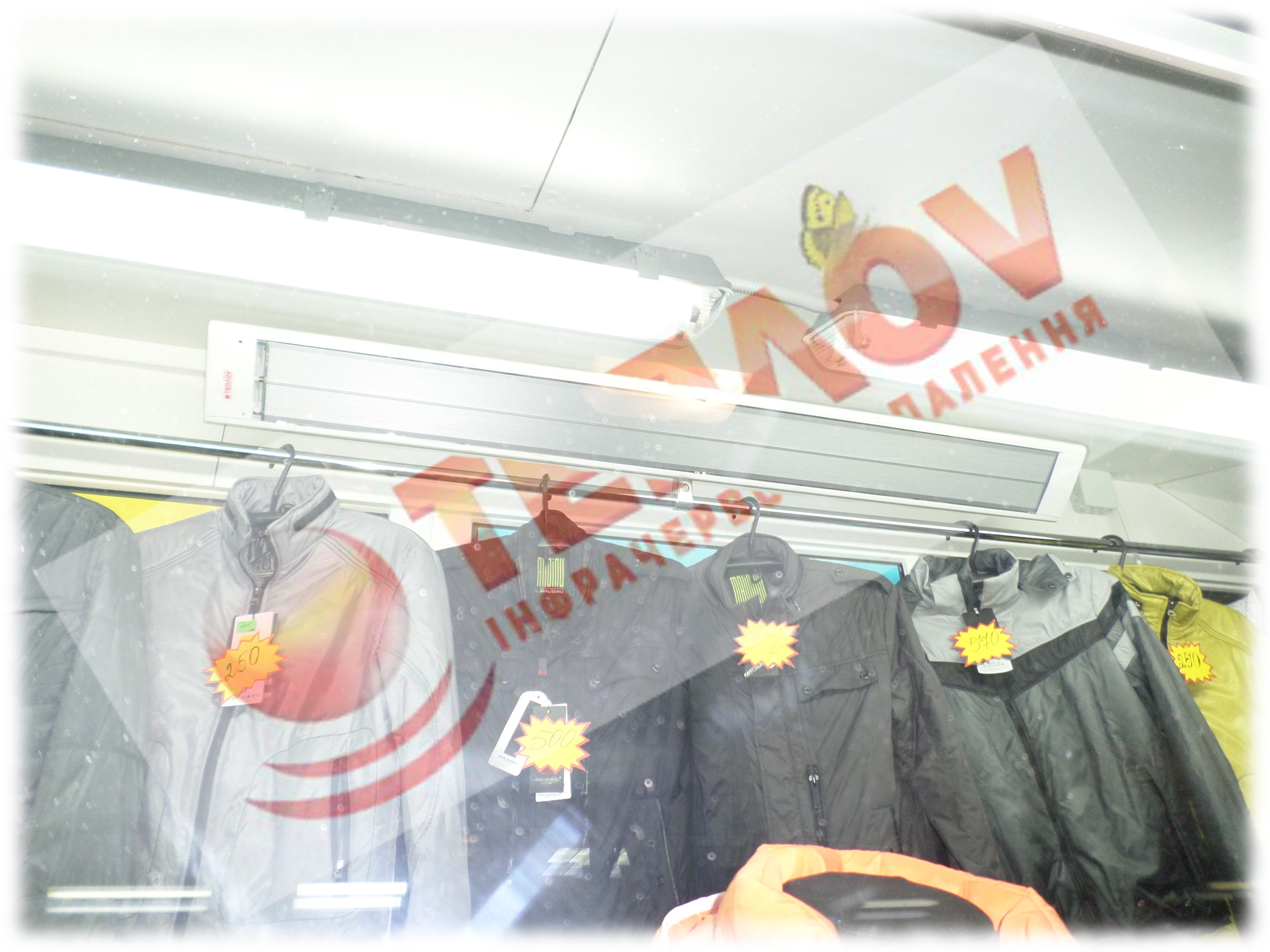
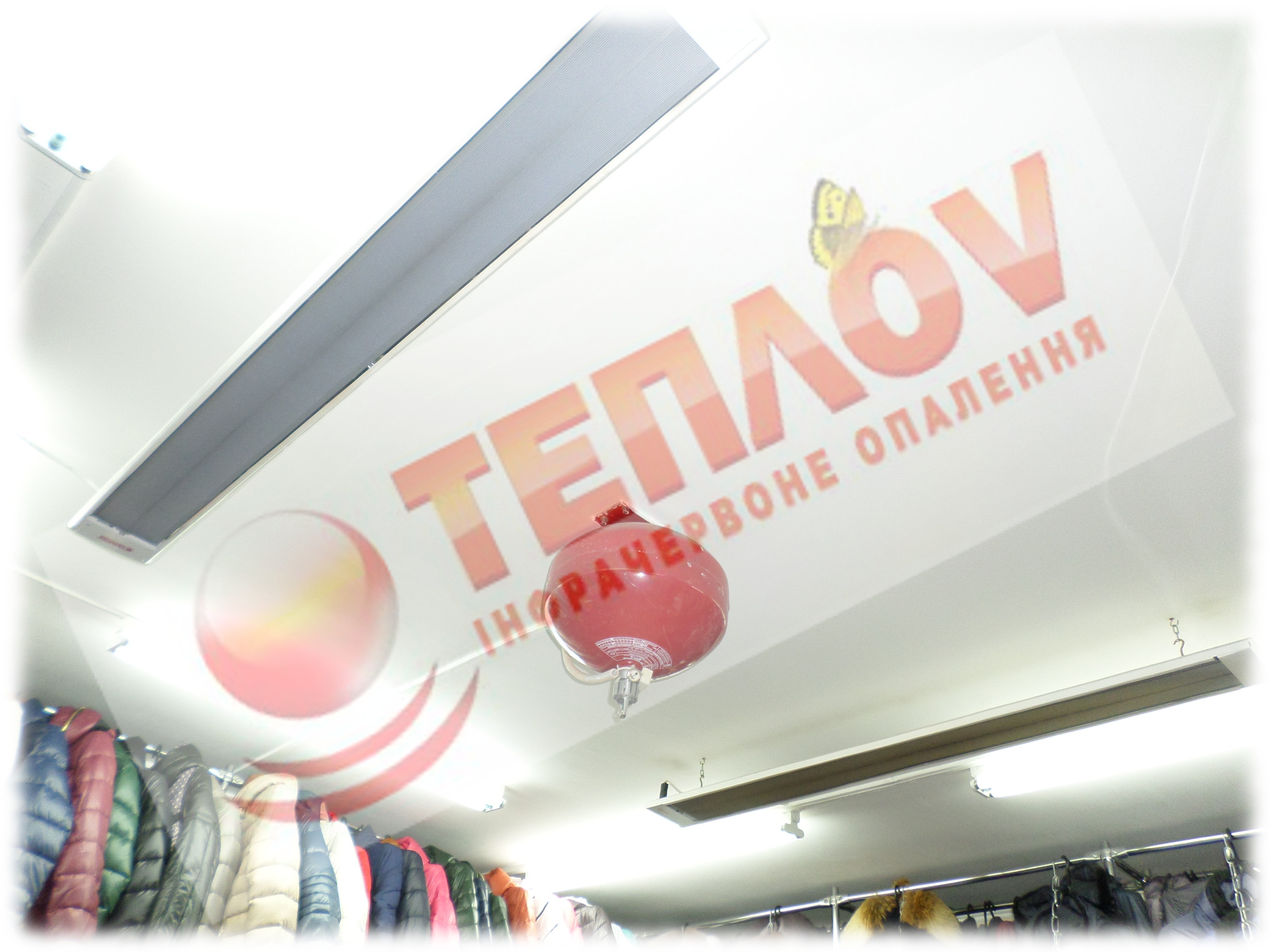
Three Teplov B1350 infrared heaters were installed to heat a retail pavilion in Rivne selling clothing for adults and children. The equipment was positioned beneath the ceiling, leaving the sales floor free of heating appliances.
For this type of retail space, warmth for customers and staff needs to work alongside convenient product displays. Ceiling installation keeps the floor available for retail fixtures and walkways.
The task — heating a retail outlet without sacrificing usable space
A clothing pavilion needs space to display merchandise and allow customers to browse. Choosing heating involves more than heat output: where the appliances will stand or hang, and whether they will interfere with daily shop operations, also matters.
Ceiling-mounted infrared heaters allow equipment to be positioned beneath the sales area ceiling. Unlike portable floor-standing heaters, they do not need a space among merchandise or beside walkways.
The installed solution — three Teplov B1350 heaters
This project used Teplov B1350 infrared heaters.
| Parameter | Project details |
|---|---|
| Premises | Clothing retail pavilion |
| City | Rivne |
| Equipment | Teplov B1350 |
| Quantity | 3 units |
| Position | Beneath the ceiling |
The practical outcome of this arrangement is that the heating equipment occupies the upper part of the room, leaving the floor available for retail use. This installation is a project example, rather than a standard equipment package for every pavilion.
How infrared heating works in retail premises
Infrared radiation transfers heat to surfaces within the heaters’ coverage area. The warmed surfaces then exchange heat with the surrounding air. Both heater output and the direction in which heat is delivered therefore matter.
In a clothing shop, equipment selection takes account of where staff and customers spend time, the positions of retail fixtures and the installation height. This helps match the heating arrangement to the layout.
The advantage of the Teplov B1350 solution for a retail outlet is the combination of ceiling installation and radiant heat transfer. The number of heaters still needs to be determined from heat loss: installing infrared equipment does not itself eliminate heat losses through walls, windows or ventilation.
Managing temperature and running costs
Infrared heaters can operate with a thermostat to maintain a chosen temperature. It controls heating according to the air temperature at its sensor, switching heating off when the setpoint is reached and back on as required.
Where a new project requires automatic temperature changes around opening hours, programmable controls can be specified. Equipment output and electricity consumption should be distinguished: running costs depend on actual operating time, heat loss and temperature settings.
Other clothing shop heating projects
The bridal shop heating and denim clothing shop heating projects offer examples of equipment used in different retail settings. They illustrate individual installations and do not replace system selection for your own premises.
General guidance on selecting equipment is available in the Heating Shops and Commercial Premises section.
Selecting heating for your retail pavilion
Need heating for a retail outlet?Send the details needed to select equipment: floor area, ceiling height, photographs or a floor plan, insulation details and opening hours. Also specify whether you need primary heating or supplementary warmth. This information will help determine suitable models, quantities and installation positions.
Questions about heating a retail pavilion
Can infrared heaters provide the primary heating for a pavilion?
Yes, if the system has enough output to cover the calculated heat loss and the premises allow the equipment to be positioned correctly. Infrared heaters can also provide supplementary heating.
Will three B1350 heaters be enough for my retail outlet?
The number of heaters used in another project cannot establish this. Floor area, ceiling height, insulation, glazing, ventilation and the required temperature must all be considered. Three B1350 heaters are the specification of this particular installation, not a universal requirement for pavilions.
What should be considered when positioning heaters in a clothing shop?
Installation height, the places people use and the positions of retail fixtures all matter. The clearances specified in the installation instructions must be maintained, including distances from clothing and other objects. Heater placement should suit the shop layout.