
Infrared heating for a cultural centre

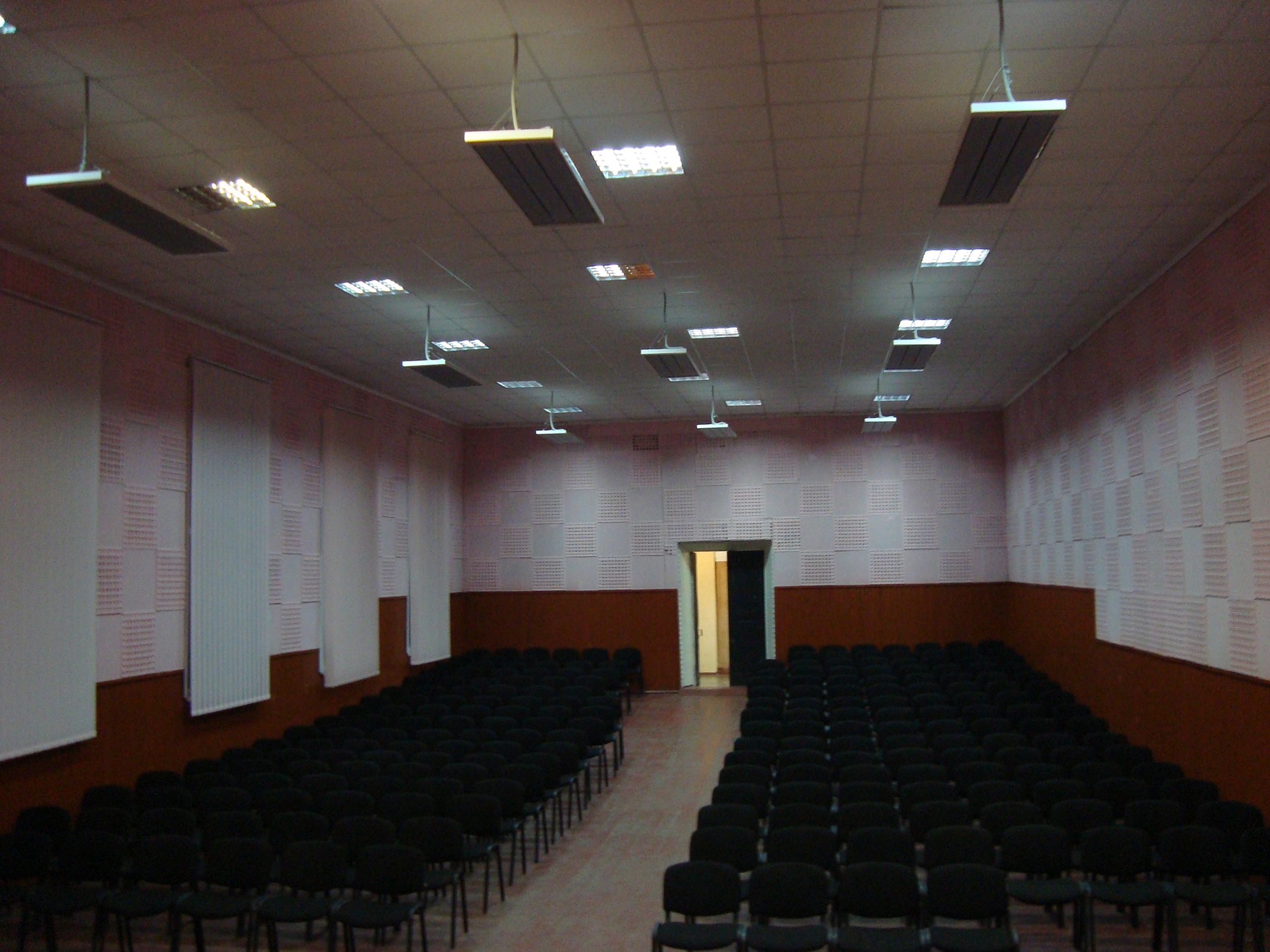
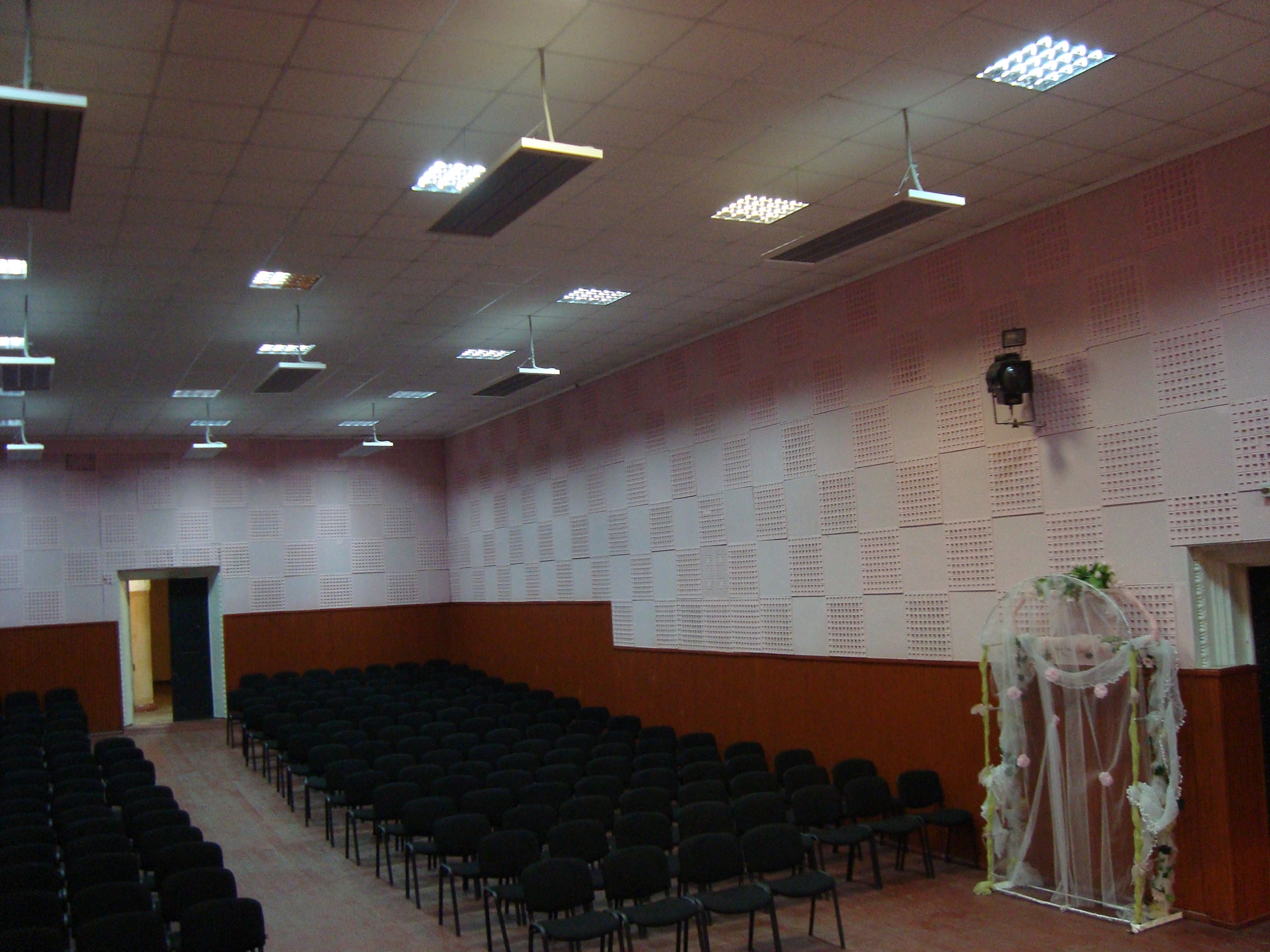
At the cultural centre in Stepanky, Cherkasy region, infrared heating was installed for a 200 m² auditorium and a 40 m² area covering the stage and part of the backstage space. The task was to provide heating for visitors and performers while maintaining a lower temperature on days without concerts.
The room is 6 m high, with heaters mounted 5 m above the floor. In operation, the temperature was maintained at around +10 °C between events and raised to approximately +20 °C before the audience arrived. Experience at this site confirmed that this warm-up took a few hours.
Equipment and project specifications
| Parameter | Project details |
|---|---|
| Auditorium | 200 m² |
| Stage and part of the backstage area | 40 m² |
| Room height / mounting height | 6 m / 5 m above the floor |
| Heaters | 9 × Teplov P3000; 2 × Teplov P2000 |
| Total installed heating capacity | 31 kW |
| Controls | Thermostats |
| Operating temperatures | Around +10 °C between events; around +20 °C during events |
Heating the high-ceilinged auditorium and stage
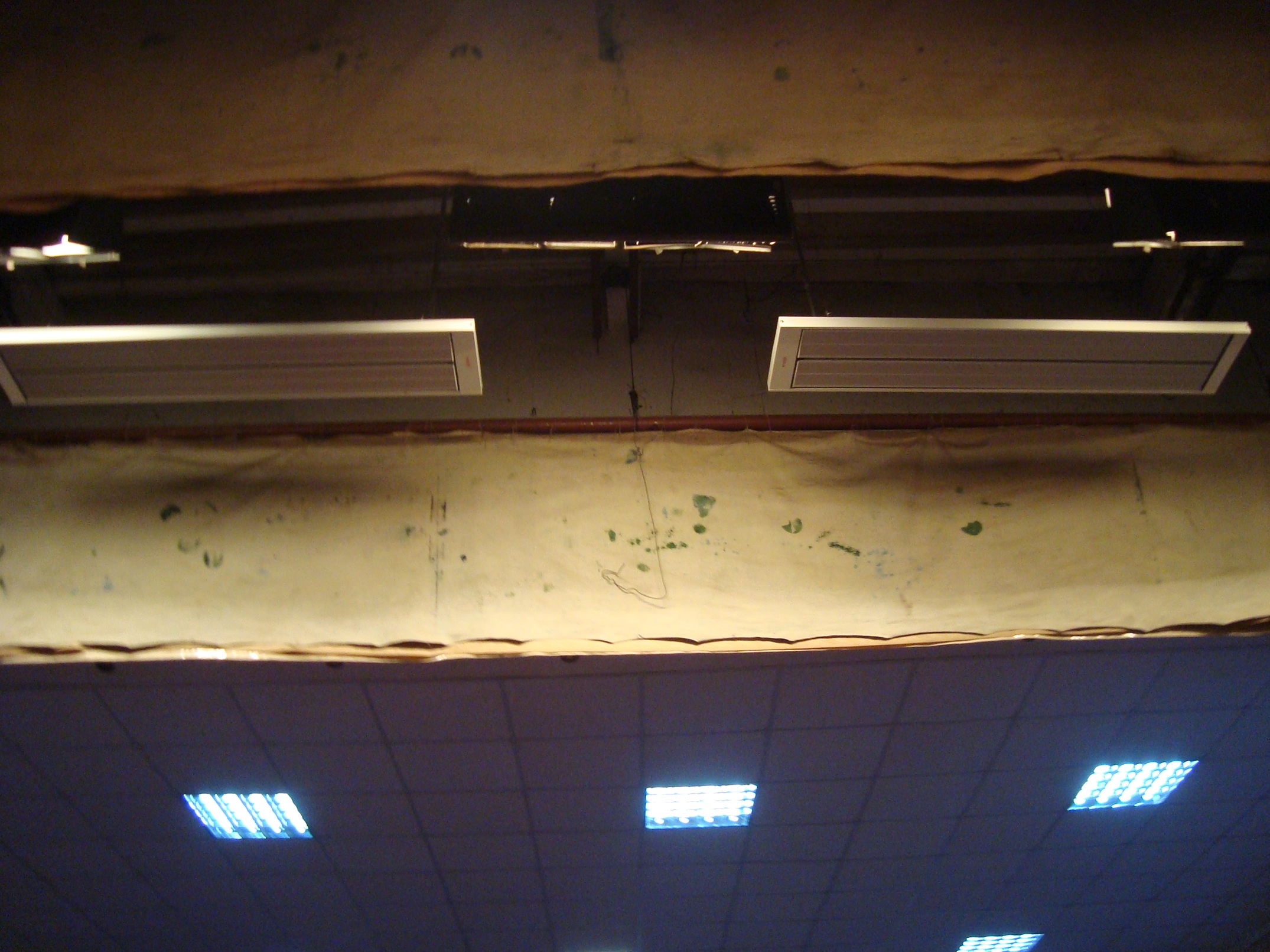
The project uses ceiling-mounted infrared heaters. Overhead placement keeps aisles and the space around audience seats clear. Infrared radiation transfers part of the heat directly to people and surfaces within the heaters’ coverage; the warmed surfaces also exchange heat with the air.
Total heating capacity is only one consideration in a seated auditorium. Heater placement needs to account for the distance to occupants, seating rows, stage lighting and structures that could obstruct radiation. The 5 m mounting height is a solution for this particular site, rather than a universal specification for every hall.
Temperature between concerts and preparation for an event
Thermostats allowed the temperature setting to be changed according to the use of the room. Between events, heating remained on to maintain around +10 °C. Before a concert, the settings were adjusted in advance to reach approximately +20 °C by the start of the event.
The confirmed operating experience at this cultural centre was a rise from +10 to +20 °C within a few hours. This was a warm-up from a maintained temperature, rather than a cold start in an unheated building. At another site, preparation time will depend on heat losses, outdoor temperature, ventilation and heating capacity.
Why the Teplov solution suited this project
The project combined a high-ceilinged hall, audience seating and a stage area. Equipment selection included 3 kW and 2 kW models, overhead placement and thermostat control. Practical evidence that the solution worked comes from the two temperatures used in operation and the ability to prepare the hall for events within a few hours.
A lower temperature between concerts reduces the indoor-to-outdoor temperature difference and the heat losses associated with it. However, the installed capacity of 31 kW does not by itself indicate monthly electricity use: consumption depends on operating hours and conditions.
Another example of a room where visitors remain seated for extended periods is the Laguna poker club heating project. It uses different heater models and a different mounting height: each layout is selected for the conditions of the site.
Selecting heating for a cultural centre or auditorium
For an initial equipment selection, provide the floor area and height of the hall and stage, event schedule, required temperatures, insulation details and available electrical capacity. A seating and stage equipment plan will help us discuss heater placement. We will propose an equipment list and calculate its cost.
Explore other applications in our section on heating public and commercial premises.
Cultural centre heating questions
Can the temperature be lowered between events?
Yes, provided the setting suits the building’s operating requirements. At the Stepanky cultural centre, around +10 °C was maintained between events and around +20 °C during events. For another building, the setting should account for its use, equipment and the storage requirements of its contents.
How many hours before a concert should heating be increased?
At this site, raising the temperature from +10 to +20 °C took a few hours. For another hall, the lead time should be determined from its characteristics and checked in operation. This result does not describe heating a building from a fully cold state.
Can the same equipment be used in another 240 m² hall?
Matching floor area alone is insufficient for equipment selection. Room height, heat losses, ventilation, seating and stage layout, operating temperatures and available electrical capacity must also be considered. The set of 11 heaters with a total capacity of 31 kW applies to this particular project.