
Heating the Travellers’ Club store in Kharkiv

An outdoor equipment store needs warmth during opening hours for customers and staff. After closing, maintaining the same temperature all night is not always necessary. The heating solution for the Travellers’ Club store in Kharkiv therefore combines four Teplov P3000 infrared heaters with a programmable thermostat. The heaters supply heat, while the controls change the temperature setting according to a schedule.
The solution — ceiling heaters and scheduled control
In retail premises, equipment placement matters alongside heating capacity. Floors and walls are needed for shelving, product displays and aisles. Ceiling-mounted infrared heaters preserve this space by positioning the appliances above the sales floor.
Infrared radiation transfers heat to surfaces and objects within the heater’s coverage. Warmed surfaces then exchange heat with the surrounding air. Shelving and merchandise must be considered when planning the layout so they do not create unwanted obstructions to heating the intended areas.
| System component | Solution at this site |
|---|---|
| Heaters | Teplov P3000 |
| Quantity | 4 units |
| Rated power per unit | 3 kW |
| Combined rated power | 12 kW |
| Control | Programmable thermostat |
| Night mode | Automatic reduction of the temperature setting |
The combined 12 kW describes the installed rated capacity. Actual electricity use depends on heater operating time, heat loss and control settings.
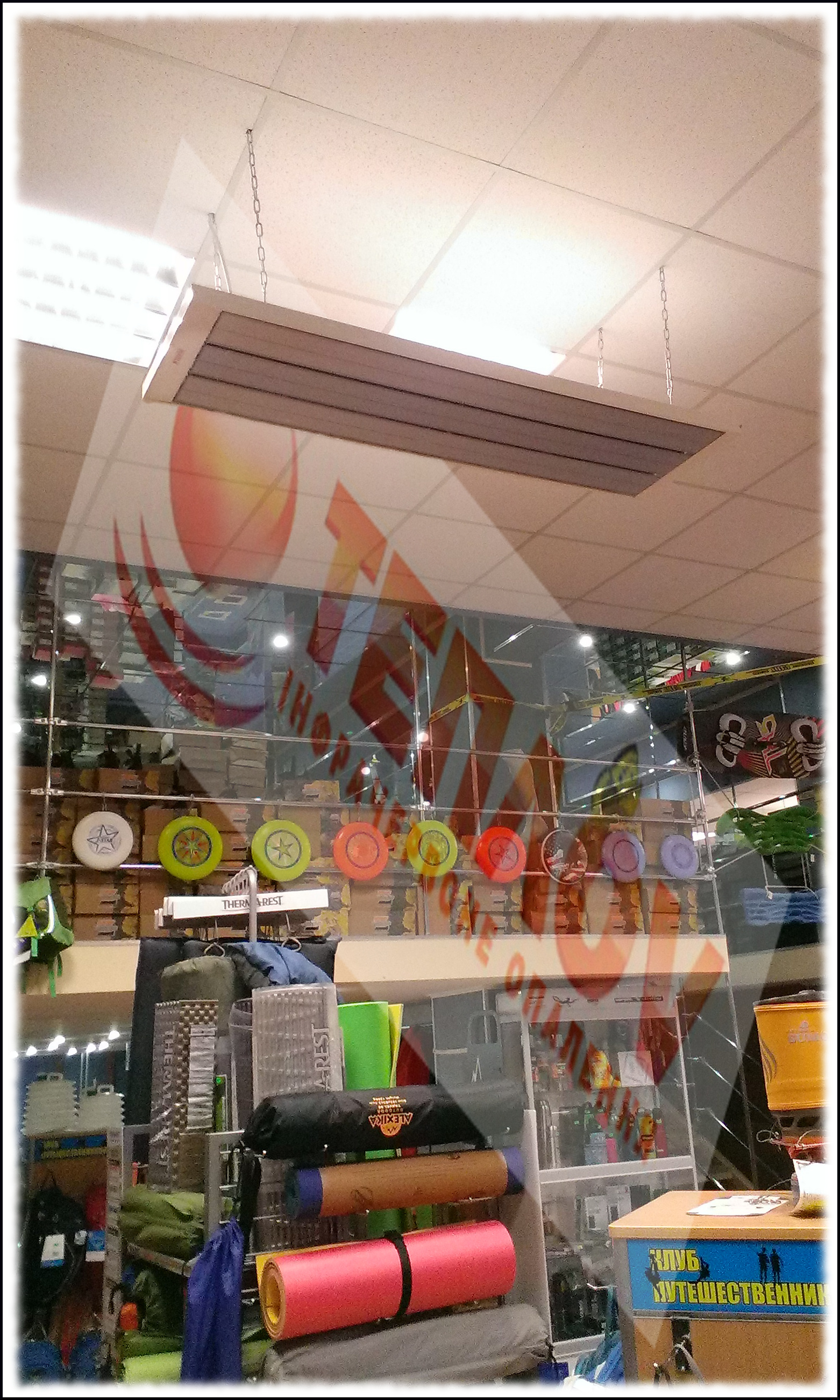
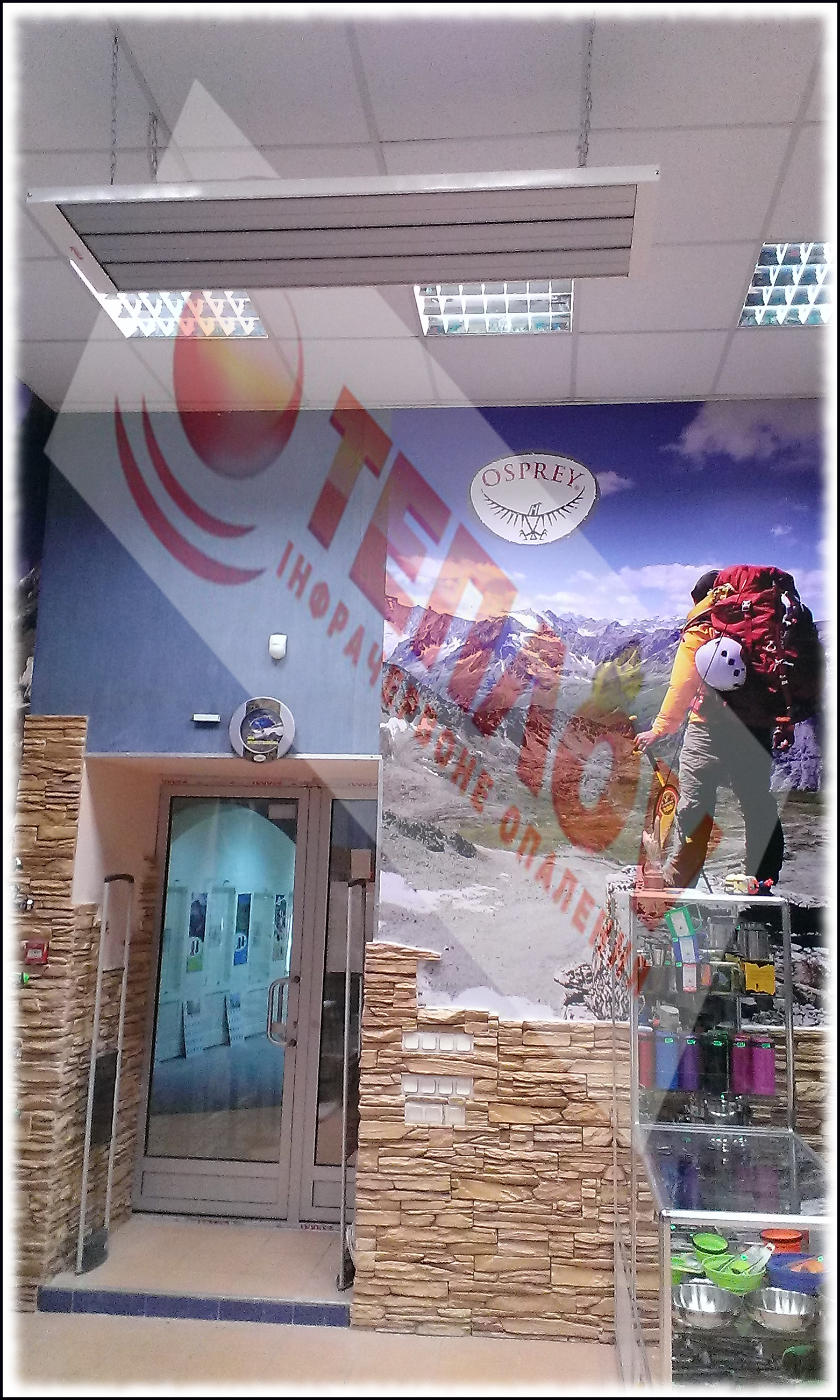
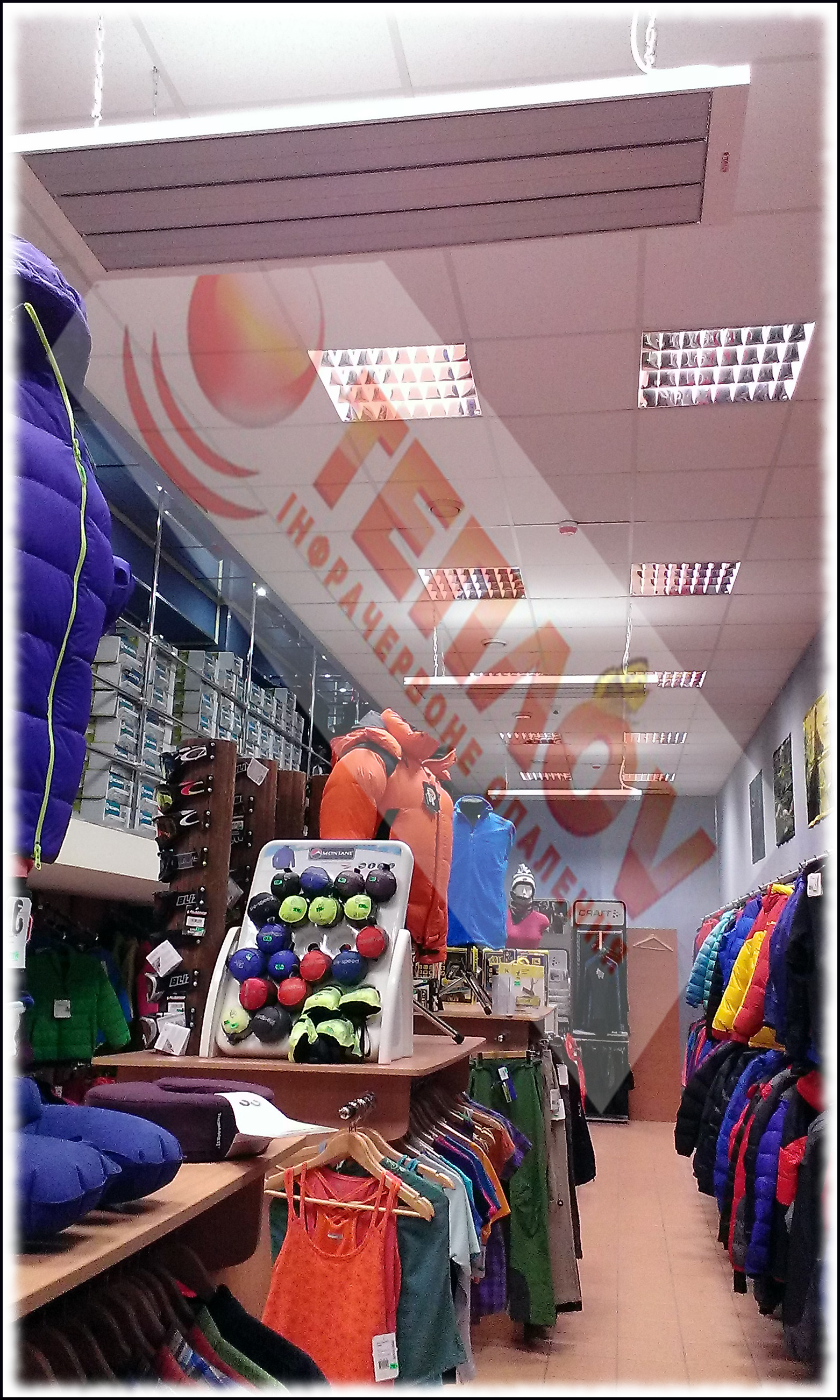
Store heating that follows opening hours
A conventional thermostat maintains a chosen temperature. Changing it in the morning and evening requires staff to adjust the setting regularly. A programmable thermostat makes these changes according to a preset schedule.
This is the approach used at the Travellers’ Club store: during working hours, the system maintains the daytime setting and automatically switches to a lower setting at night. Staff do not need to change the heating mode manually every evening.
This reduces reliance on daily staff actions. There is no need to remember who should lower the temperature after closing or which setting to select.
A lower night temperature instead of a complete shutdown
In night mode, the heating remains under thermostat control. If the temperature falls below the set value, the system can switch the heaters on to maintain it.
This limits how far the premises cool down without retaining the daytime temperature setting throughout the night. Lowering the indoor temperature reduces the difference between inside and outside temperatures and, all else being equal, reduces heat loss from the building.
The time for returning to daytime mode should account for how long the premises take to warm up. The night temperature is selected individually according to product storage requirements and operating conditions. There is no single schedule that suits every retail space.
Another example of day and night settings is the heating project for a 200 m² computer store. It uses a different equipment configuration: the same temperature-control task does not imply the same heater selection.
What the store owner gains
Equipment and controls perform connected roles in this project. Ceiling installation preserves retail space, four P3000 heaters form the heating system, and the programmable thermostat aligns its operation with the store’s schedule.
The practical benefit of automation is consistent execution of the chosen schedule. The daytime temperature is maintained when customers and staff need it, and the system switches to a lower setting at night without daily manual intervention.
Selecting heating for your store
To select a similar solution, provide the floor area, ceiling height, equipment layout, insulation, window and ventilation details, and available electrical capacity. Establish opening hours in advance: they determine both the heating schedule and the requirements for restoring the temperature before opening.
Learn more about selecting a system in our section on heating for stores and commercial premises.
Questions about store heating controls
How does a programmable thermostat differ from a conventional one?
A conventional thermostat maintains a set temperature. A programmable model can also change that setting according to a schedule. This allows a store to switch automatically between daytime and night modes without daily staff adjustments.
Should store heating be switched off completely at night?
Not necessarily. In this project, the temperature setting is lowered: the system remains under thermostat control and switches the heaters on when needed. The choice between a lower setting and shutdown depends on the premises, storage requirements and operating schedule.
How should the night temperature be selected?
Consider the acceptable conditions for the goods and premises, the rate of cooling and the time needed to warm the space again. Heating selection requires both the dimensions and the operating schedule. Settings from another store should not be copied automatically.
Do four P3000 heaters constantly draw 12 kW?
No. 12 kW is their combined rated power. If all four operate at rated power for one hour, calculated consumption is 12 kWh. Daily electricity use depends on their actual operating time. A programmable thermostat controls temperature settings; it does not establish a fixed amount of energy consumption.